
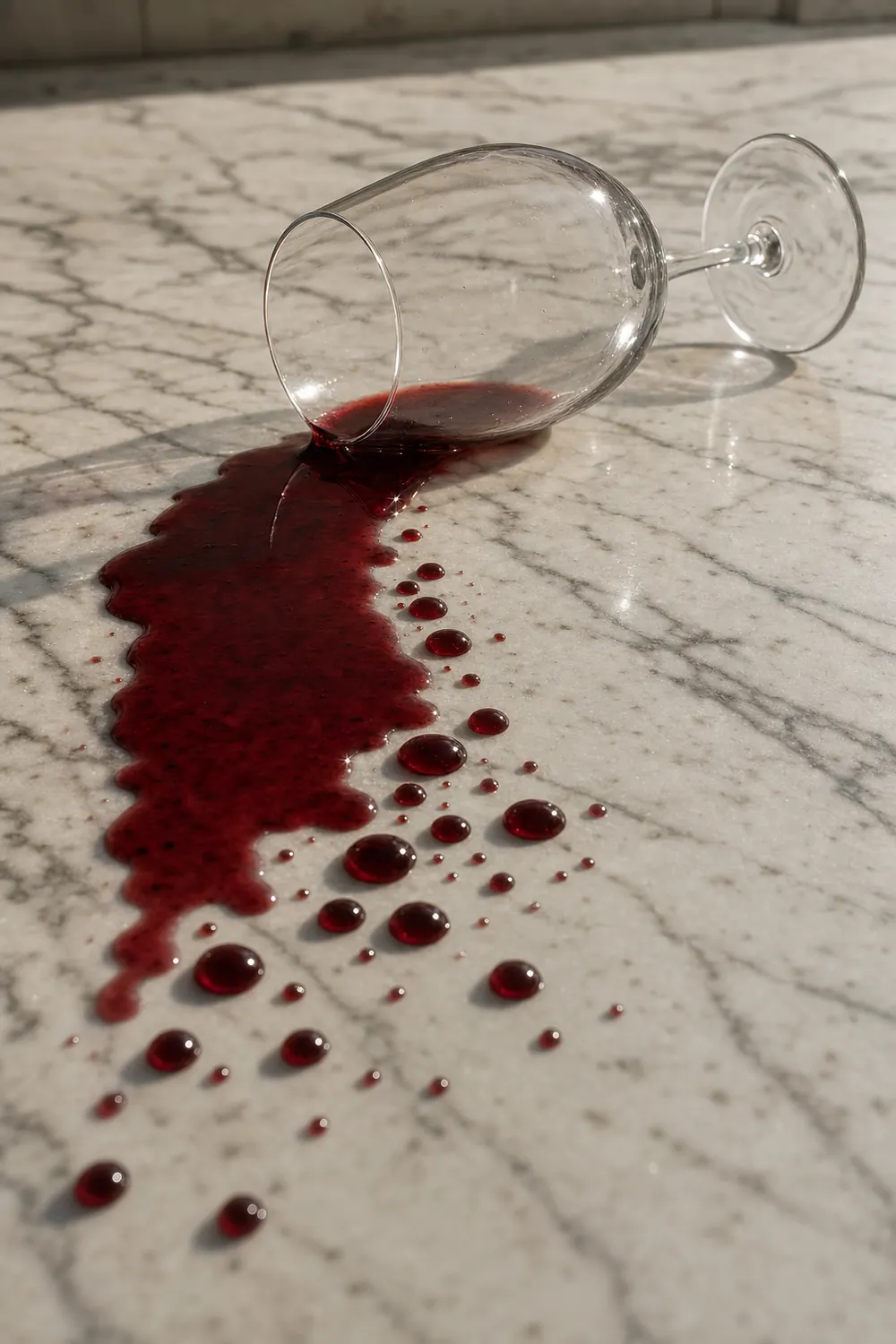
Surface protection film is a thin, optically clear layer that bonds to the top of a stone surface and takes the daily damage in its place. Spills sit on it instead of soaking into the stone. Acids never touch the polish. Scratches and heat marks land on a layer that was put there to take them, and the stone underneath stays exactly as it was installed.
You'll see the same product under several names: stone protection film, marble protection film, benchtop protection film, stone surface protection film, and countertop protection film in American spelling. Different search terms, one idea: a clear, sacrificial layer between your stone and your life.
What it actually stops
Natural stone has two everyday enemies. The first is staining: marble, limestone and travertine are porous, so red wine, coffee, oil, beetroot and turmeric soak in and stay. The second is etching: those same stones are calcium carbonate, which reacts on contact with everyday acids like lemon juice, vinegar and soft drink, leaving dull marks no cleaning can remove. Add dragged platters, dropped keys and hot serving dishes, and a working kitchen slowly writes its history into the surface.
The film interrupts all of it. Liquids bead on top instead of soaking in. Acid never reaches the stone. Everyday scratches land on the film's self-healing surface, and fine marks tighten back out with a little warmth. Heat is covered too, within honest limits: the film is rated to 120 °C, tested for extended exposure and printed on its technical data sheet, and a pan straight off the flame still gets a trivet, at our place as well as yours.
One clear layer. The stone stays the stone.
What it isn't
It isn't a sealer. Sealers soak into the pores and slow staining down, but they leave the surface as bare stone, so a sealed marble top etches just as readily as an unsealed one. It isn't a coating either: nothing is painted or cured onto your stone, and nothing changes it. The film is a separate physical layer with an adhesive engineered to release cleanly, so it can be removed without a trace. The full comparison lives in sealers, coatings, film.
And it isn't the blue temporary film builders roll over benchtops during a renovation. That product protects stone from tradespeople for a few weeks. This one protects stone from daily life, for years, while staying invisible enough that guests can't find it.
Where it goes
Anywhere stone gets used: kitchen benchtops and islands, waterfall edges, splashbacks, bathroom vanities, dining and side tables, butler's pantries and bar tops. Each panel is measured against the surface and cut by hand on the day, and the finish is matched to the stone: gloss for polished, satin for honed, so the surface still reads as stone. The full list is on the surfaces page.
On dining tables, where damage happens first
Kitchen benchtops get the attention, but the marble dining table lives the harder life: red wine and dressed salads, hot serving dishes, keys, homework, board games, and nobody wipes down a dinner party while it's still going. A wine ring left overnight isn't a mark on a table, it's a stain in the stone, and on a table it lands where everyone looks. Every seat is front row.
The answer is the same film, cut to the table. Protection film for marble dining tables is measured and cut by hand on the day, curves included, so round and oval tops aren't a problem. Honed marble and travertine take satin and keep their soft look; polished tops take gloss and keep the mirror. Side tables, coffee tables and bar tops take the same treatment, quoted on their own or as part of a bigger job. And hot serving dishes still get trivets, at our place as well as yours.
Is it right for your stone?
If you own marble, limestone or travertine, the film solves problems those stones genuinely have. Quartzite and engineered quartz owners usually come for scratch and stain insurance. Granite rarely etches, and plenty of granite owners only need a sensible sealing routine; we tell people that to their face. If you're weighing it up, why marble etches is the five-minute background, and how it works covers the film itself, limits included. There's also a dedicated protection guide for each stone: marble, granite, quartzite, limestone, travertine and engineered stone.