
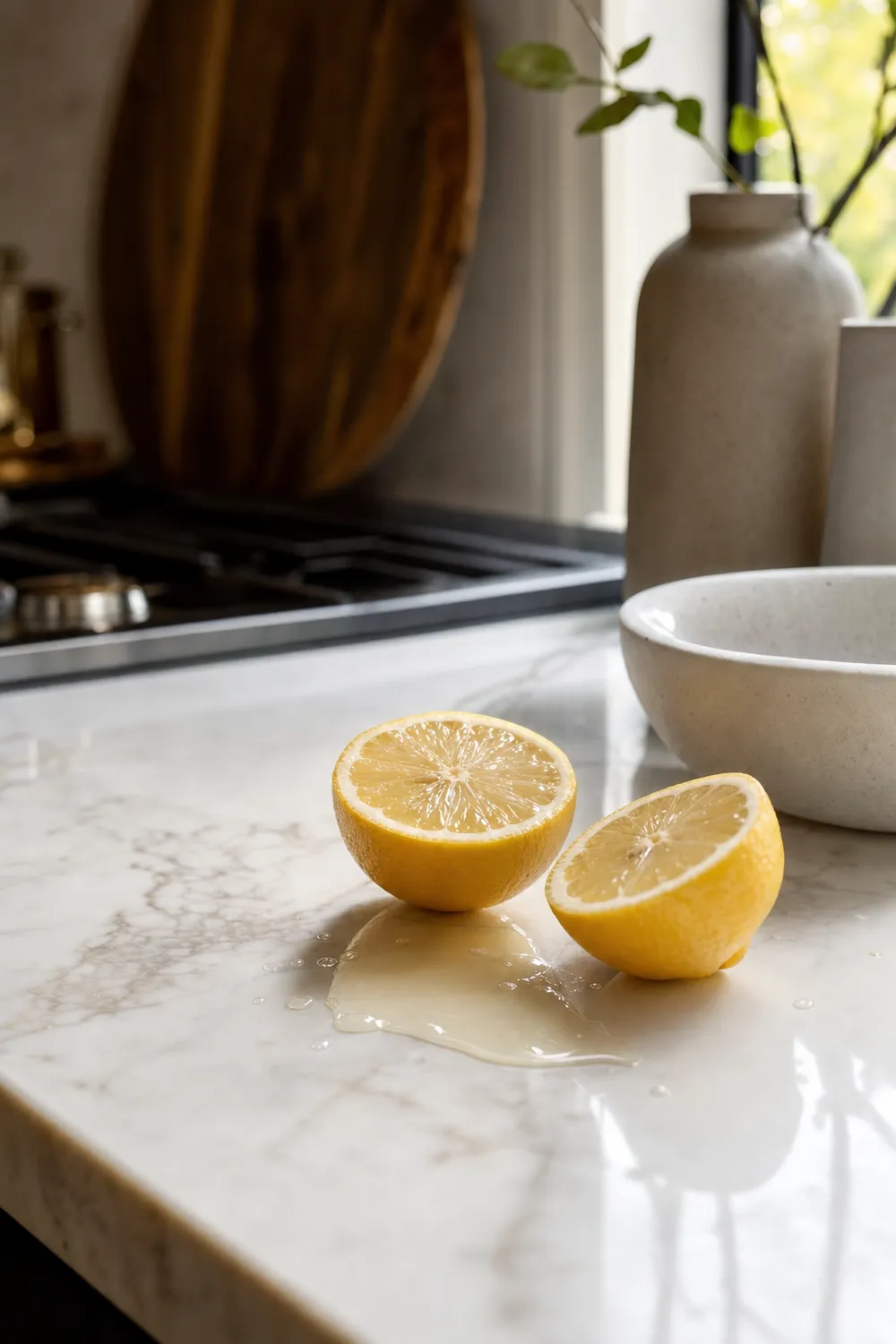
Marble benchtops get damaged three ways: acid etches the polish, liquids soak in as stains, and daily traffic leaves scratches. Protecting marble means dealing with all three at once, and most of the standard advice only ever covers one. Here's the complete answer, from the daily habits that genuinely help to the one fix that covers the lot.
What damages marble benchtops?
Marble is calcium carbonate, and calcium carbonate reacts with acid on contact. Lemon juice, vinegar and soft drink dissolve a microscopic layer of the surface wherever they touch, leaving dull etch marks that no amount of cleaning can remove. The stone is also porous, so red wine, coffee, oil, beetroot and turmeric soak in and become stains rather than spills. And marble is soft as benchtop stones go: dragged platters, ceramic bowls and dropped keys all leave their signature. The chemistry is covered properly in why marble etches.
The daily habits that help
Wipe spills as they happen, especially anything acidic: with etching, the damage is done in minutes, not hours. Clean with a microfibre cloth and mild dish soap, never vinegar, bleach or cream cleansers, which attack the very polish you're protecting. Keep chopping boards under knives, trivets under anything hot, and coasters under drinks. This is real protection and it costs nothing. Its weakness is that it depends on everyone in the house doing it perfectly, forever, including at the end of a dinner party.
Does sealing protect marble?
Half of it. A penetrating sealer soaks into the pores and slows staining down, which buys you time to wipe. What it cannot do is stop etching, because sealed marble is still bare calcium carbonate on top, and it still reacts with acid on contact. Sealers also wear away and need redoing. The honest comparison of every option lives in sealers, coatings, film.
The full answer: a barrier, not a treatment
The only way to protect marble from etching, staining and scratching at the same time is a physical layer over the stone. That's what surface protection film is: an optically clear, self-healing layer measured and cut by hand to your benchtop. Acid never reaches the stone. Spills bead on the surface instead of soaking in. Everyday scratches land on the film, and fine marks tighten back out with warmth. Polished marble takes gloss, honed marble takes satin and keeps its soft look, and either way the stone still reads as stone. The limits stay honest: a trivet still lives under hot pans, and a determined knife will still leave a mark. Full detail on how it works.
You can't change what marble is. You can change what touches it.
And if your marble is already marked: repolishing can reset an etched or scratched top, and film fitted after a repolish means paying for that job once instead of every few years. Weighing it up for a honed top? Read living with honed stone first.