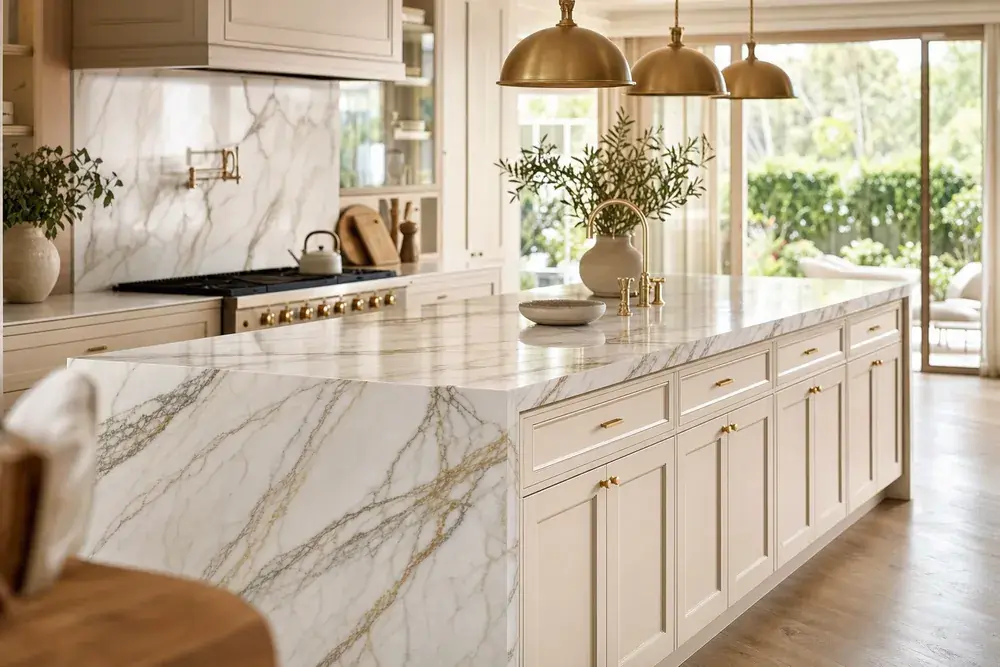
Surface · 01
Kitchen benchtops & islands
The most-used surface in the house, and the most attacked. Lemon, wine and dragged chopping boards all land here. The film takes them instead of the stone.

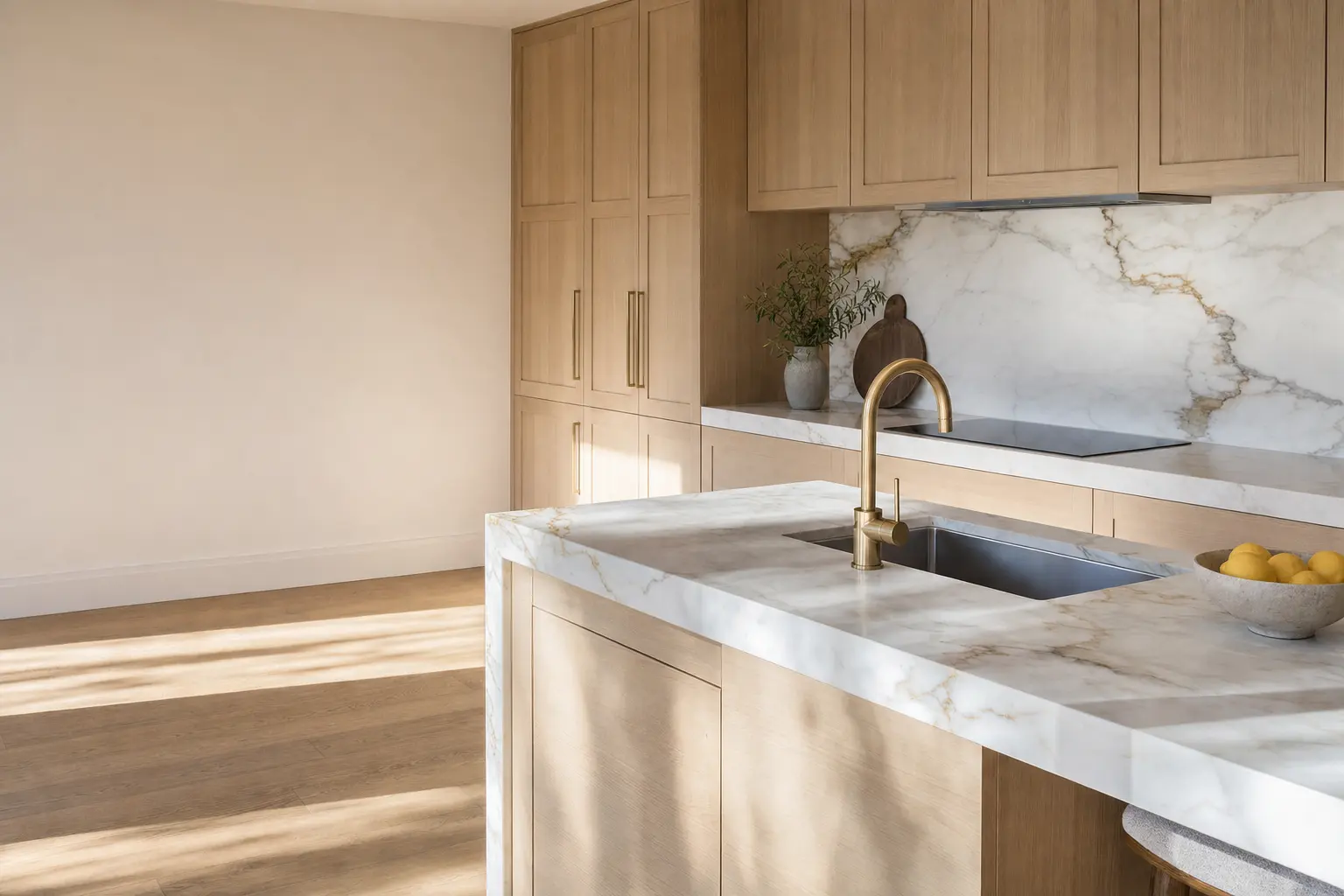
Surfaces & service area · Perth, WA
Kitchens, islands, splashbacks, vanities, tables: if it's stone and it gets used, it can be protected.
Marble · Quartzite · Granite · Travertine
01 · The surfaces
Any flat or vertical indoor stone surface can take our surface protection film. These are the six where the damage usually happens first.
The most-used surface in the house, and the most attacked. Lemon, wine and dragged chopping boards all land here. The film takes them instead of the stone.
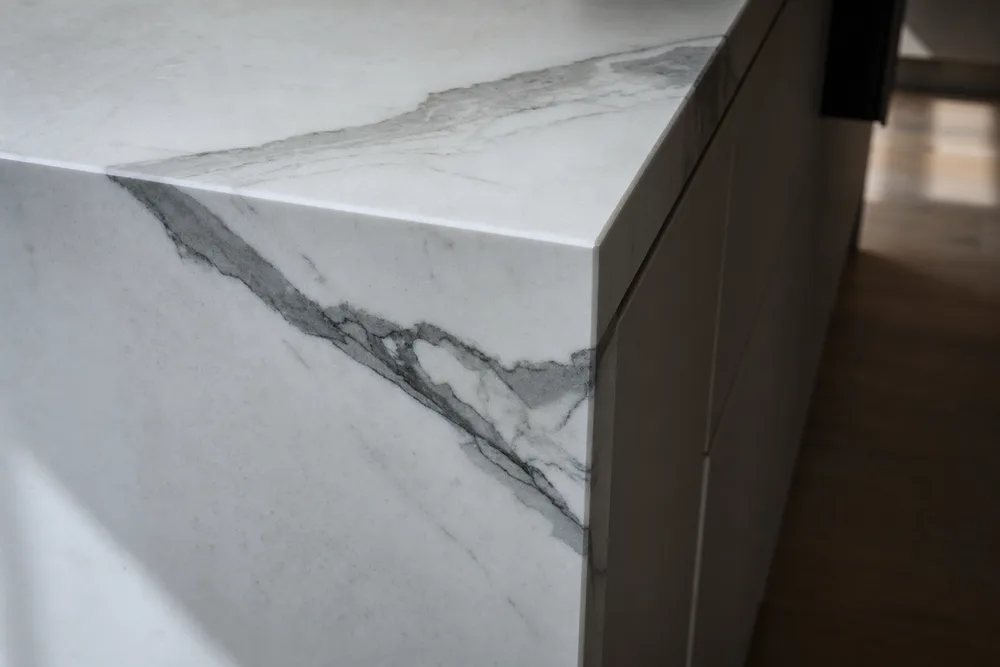
A waterfall edge collects damage at shin height: vacuum heads, school bags, bar stools. The film wraps the profile invisibly, so the showpiece edge stays a showpiece.
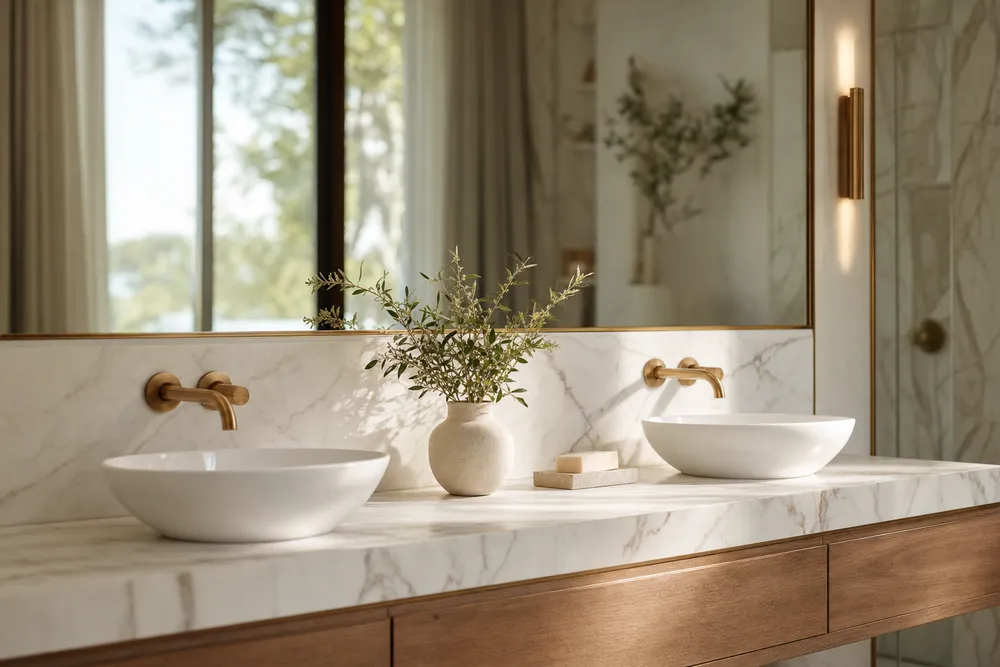
Toothpaste, perfume, makeup and hard-water spotting work on a vanity every single day. The film keeps the polish under a layer that cleans up with a wipe.
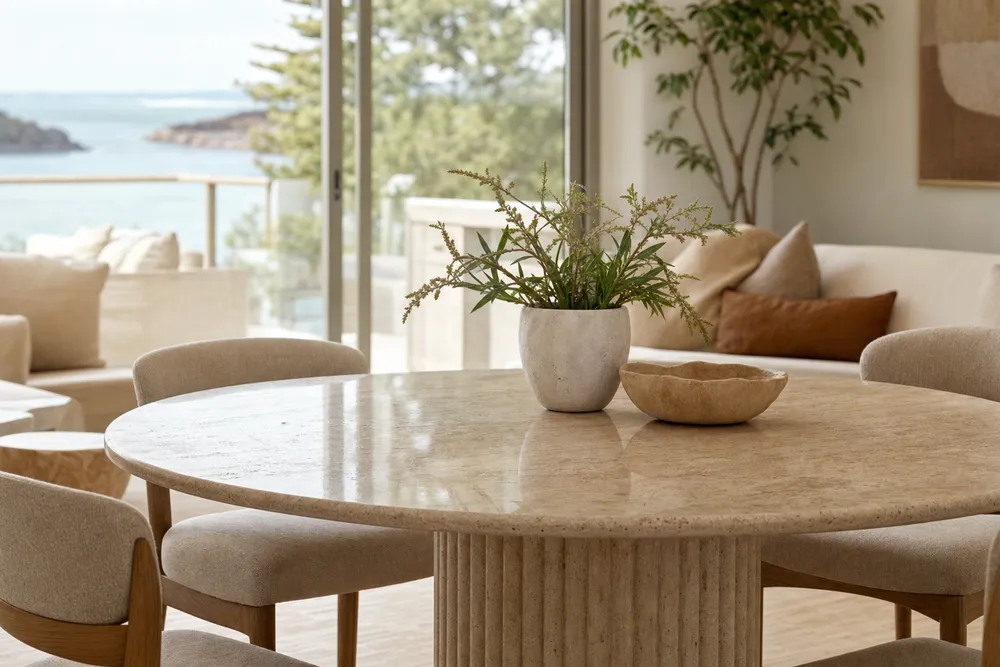
A stone table lives one dropped glass away from its first etch ring, and coasters only work when guests use them. With film on top, dinner goes back to being dinner.
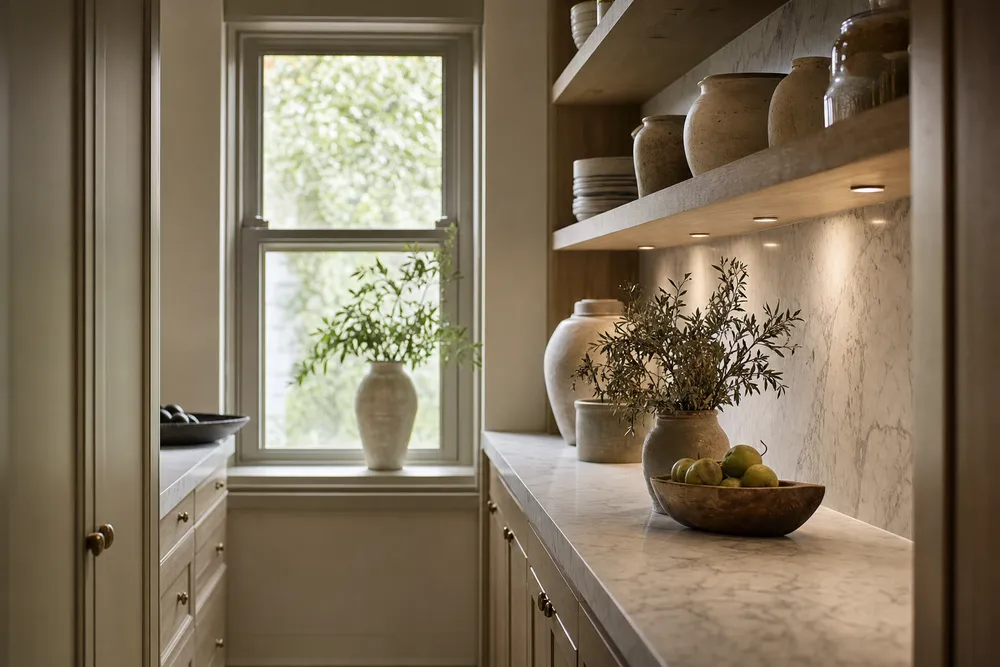
The hidden benchtop does the real cooking: appliances dragged daily, sauces left to sit. Hardworking surfaces suit the film best, because the wear lands on a layer we can replace.
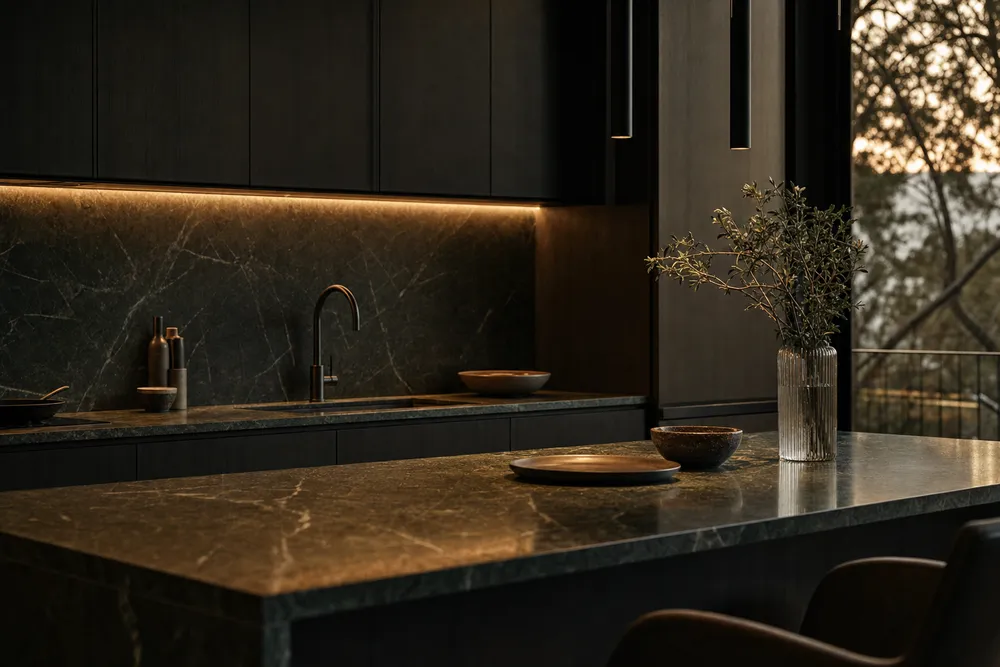
Spirits, citrus and ice buckets are a brutal combination for polished stone. The film lets the bar be poured on, not tiptoed around.
02 · The stones
The film suits some stones more than others, and on a couple it isn't worth your money. Here's the honest run-down.
The etch magnet. Its calcium surface dissolves on contact with acid, which is why lemon juice dulls a polished marble top in under a minute. This is the stone the film was made for. How to protect marble →
Harder than marble and far more scratch-resistant, but still porous enough to drink in oil, red wine, turmeric and beetroot. The film closes the surface without changing how it looks. How to protect quartzite →
Tough, not immune. Granite shrugs off most everyday knocks, but it still stains, and the resin fills in many slabs can mark under heat. The film adds the layer that deals with both. How to protect granite →
Soft, thirsty stones with open pores, so they etch and stain faster than anything else in the house. On these surfaces the film earns its keep fastest. Protect limestone → Protect travertine →
Honest note: engineered quartz already resists stains well. Where the film earns its keep is scratch, etch and heat-mark protection. And if your surface doesn't need us, we'll tell you. How to protect engineered stone →
More honesty: porcelain and sintered surfaces generally don't need film at all. If that's what you own, we'll say so and save you the money.
03 · Where we work
We install across the metro area, from the coast to the river and up the northern beaches. If you can see your suburb below, you're inside our service area.
Outside these suburbs? Ask us.
Your next step
Tell us the stone, the surface and the suburb. You'll get a fixed quote and a straight answer on whether the film is worth it for your surface.