
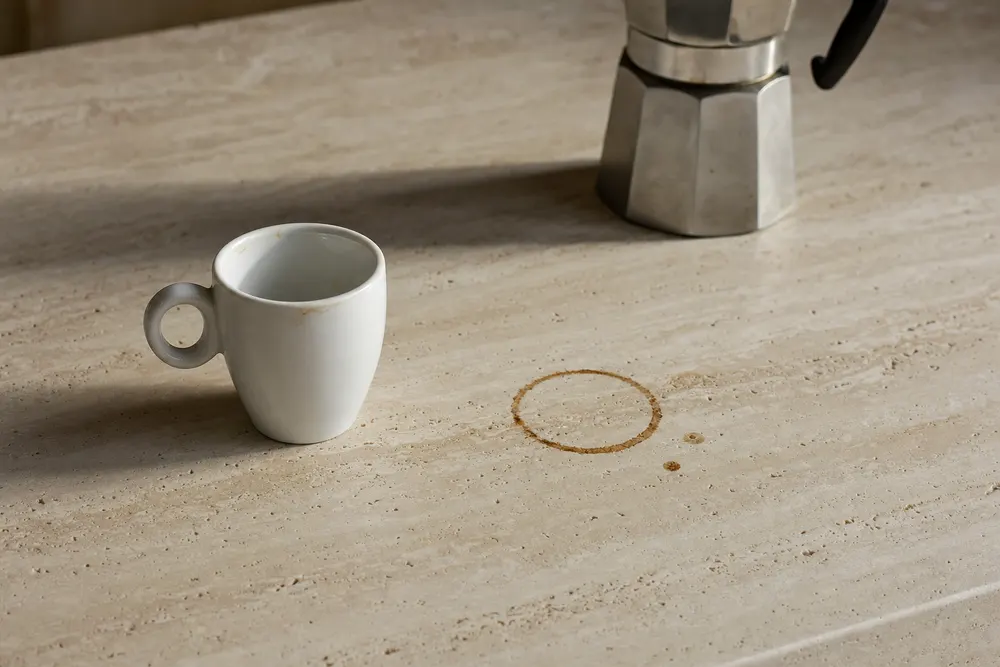
Travertine is all character: layered, pitted, warm, and formed in mineral springs rather than under deep pressure, which is exactly why it's the thirstiest surface in most homes. Protecting travertine starts with understanding that its beauty and its weakness are the same thing.
What damages travertine?
The same acids that attack marble attack travertine, because it's calcium carbonate too: lemon juice, vinegar and soft drink all leave dull etch marks on contact. Its open structure makes staining worse than almost any other stone, with coffee, wine and oil finding their way into pores and pits, and even factory-filled surfaces keep thousands of microscopic openings. The fills themselves are a weak point: they can wear and lift with use, leaving fresh pits that collect everything. And being one of the softer stones, it scratches easily.
Daily care for travertine
Neutral cleaners only, blotted spills, coasters, boards and trivets: the routine is marble's routine with less margin for error. On benchtops and tables the rule is simple: don't let anything sit. A coffee ring left overnight on travertine isn't a mark, it's a memory.
Does sealing travertine work?
Sealing genuinely matters on a stone this porous, and it still only does half the job. It slows the soaking and needs redoing regularly, and it does nothing about acid, which reacts with the surface on contact. Sealers, coatings, film covers the whole comparison.
Protection film on travertine
On honed-and-filled travertine, surface protection film closes the whole surface at once: pits, fills and stone all sit behind one clear layer, acids never make contact, and spills wipe off the film instead of finding a pore. Satin finish keeps the soft look travertine is chosen for. One honest note: deeply textured or unfilled travertine is assessed in person, because heavily pitted surfaces aren't always a good fit for film, and we'd rather say so before you commit than after.
Travertine remembers everything. The film gives it less to remember.