
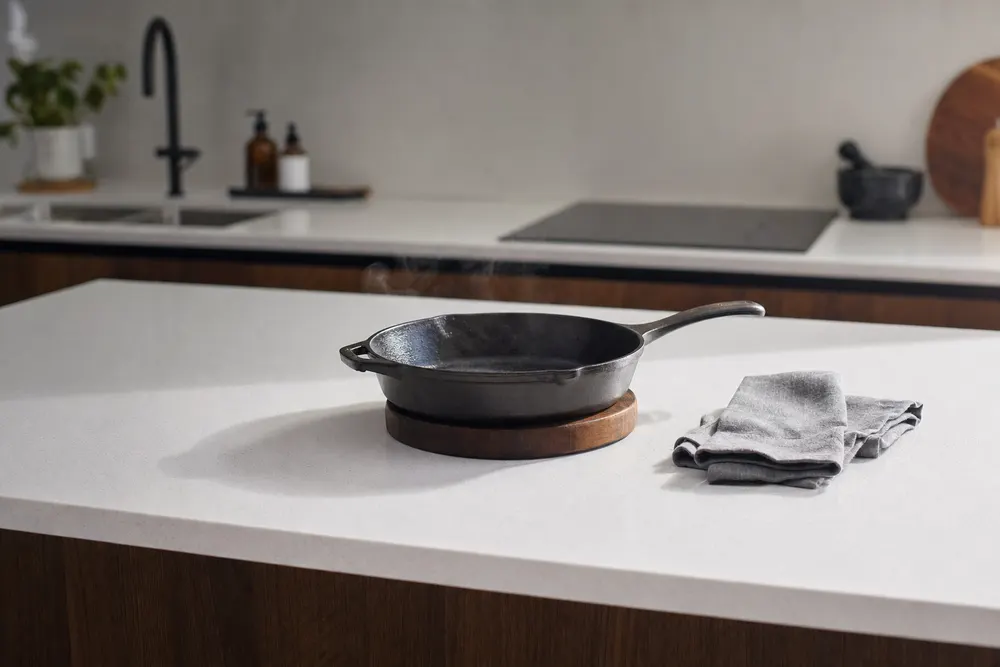
Engineered stone was sold as the indestructible benchtop, and it is genuinely tough: it resists stains and everyday acids far better than any natural stone. It's also no longer replaceable. Since the national ban, protecting the engineered benchtop you already own has gone from an afterthought to the only option, so it's worth knowing what actually hurts it.
What actually damages engineered stone?
Heat, first and always. Engineered stone is quartz bound in resin, and resin scorches: a hot pan straight off the flame can leave a permanent pale mark or a fine ring of cracks that no repair fully hides. Scratches, second: the surface resists them well, but gloss tops collect fine marks over the years, and unlike natural stone, engineered stone can't simply be repolished. Harsh chemicals, third: strong solvents, paint strippers and some oven cleaners can dull or mark the resin. Everyday wine and lemon juice, though? Mostly harmless. Credit where it's due.
The ban changed the maths
Since July 2024, new engineered stone benchtops can no longer be manufactured, supplied or installed in Australia. Keeping the one you have is completely fine, but replacing it like for like is off the table: serious damage now means living with it, or switching to a different material entirely. That changes what a scorch mark costs.
Daily care for engineered stone
Trivets under everything hot, without exception: heat is this material's one real enemy. Mild dish soap and a microfibre cloth handle the cleaning, and the aggressive products stay in the laundry: no solvents, no abrasive pastes. Boards under knives, as on any benchtop. No sealing required, ever, which is part of why people chose it in the first place.
Where film fits, and where it doesn't
Honesty first: plenty of engineered stone benchtops don't need film, and if yours is one of them, we'll say so. Where surface protection film earns its place is keeping an irreplaceable surface at day-one condition: everyday scratches land on the film's self-healing layer instead of a gloss you can't repolish, harsh marks never reach the resin, and warm dishes are covered within the film's published limits. What the film doesn't change: the hot-pan rule. A trivet still lives next to the stove, film or no film.
The best reason to protect it: you can't buy another one.