
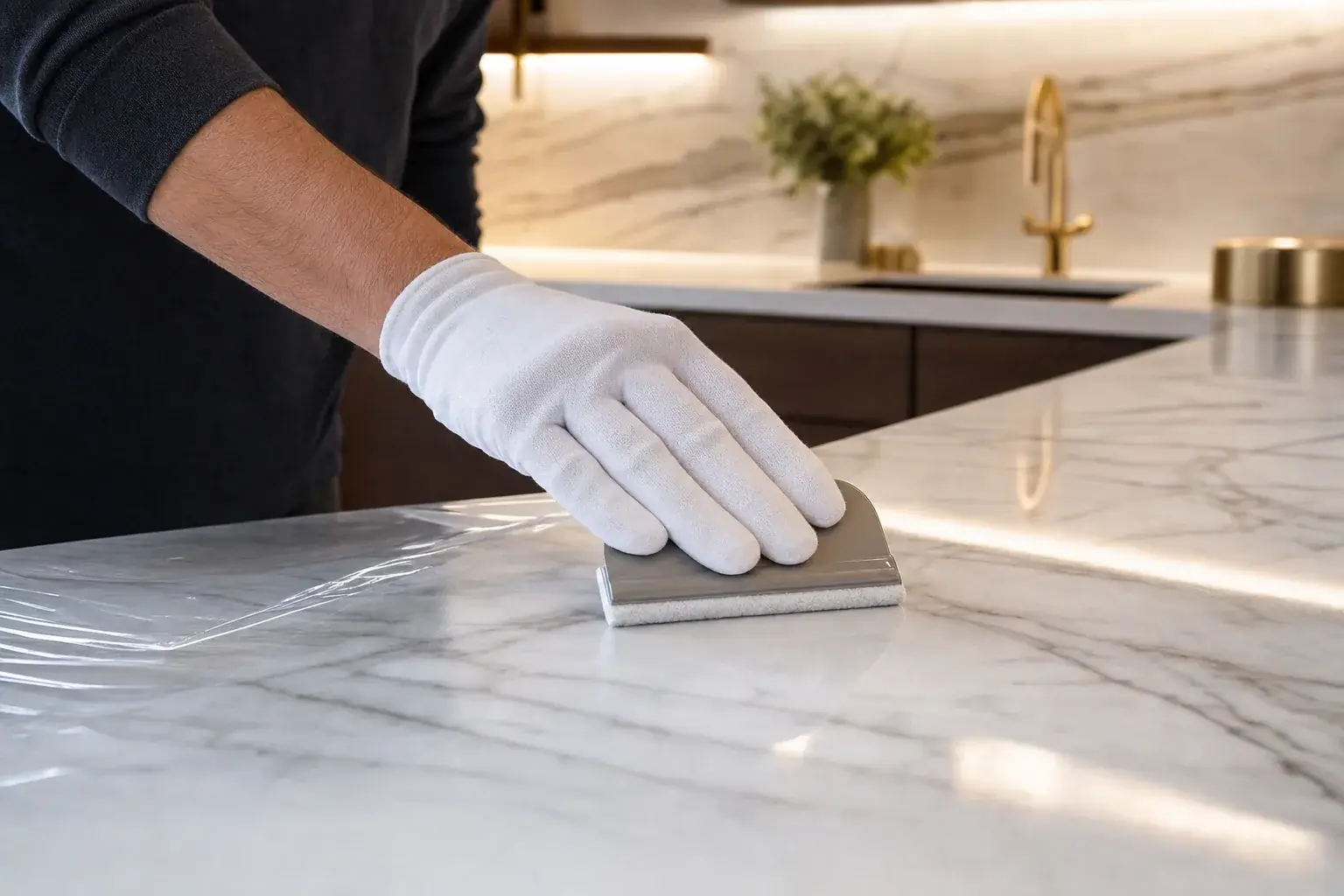
How it works
The problem is daily.
So is the protection.
Lemon juice, red wine, a dragged pot, a hot cup. This page shows exactly how the film stops what everyday life does to bare stone, limits included.
01 · The film
One film that
stops stains.
An optically clear surface protection film that becomes the surface of your benchtop. While it's on, stains can't soak in and acid can't reach the polish. Scratches and heat marks land on the film, not the stone you paid for. Heat resistance is rated to a tested 120 °C, printed on the film's technical data sheet.
The top layer is self-healing. It repairs itself from the fine marks of daily life with nothing but warmth. The adhesive underneath is engineered for residue-free removal, so the day the film comes off, your stone is exactly the surface you paid for. Marble, quartzite, granite, limestone, travertine, onyx and engineered quartz. Indoor surfaces only, and we say so.
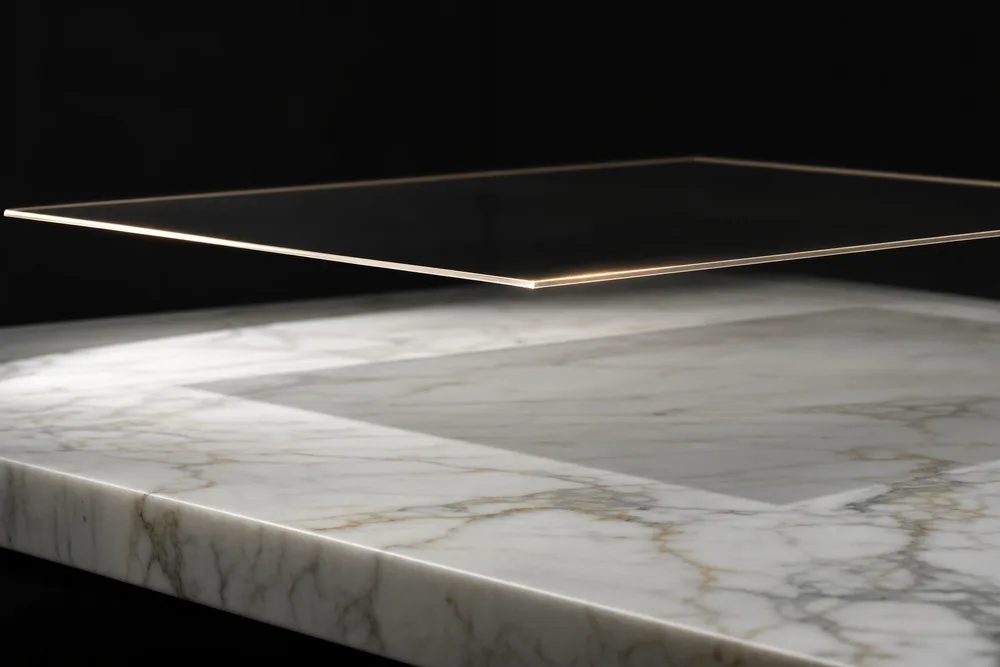
A clear layer above the stone. Damage stops there.
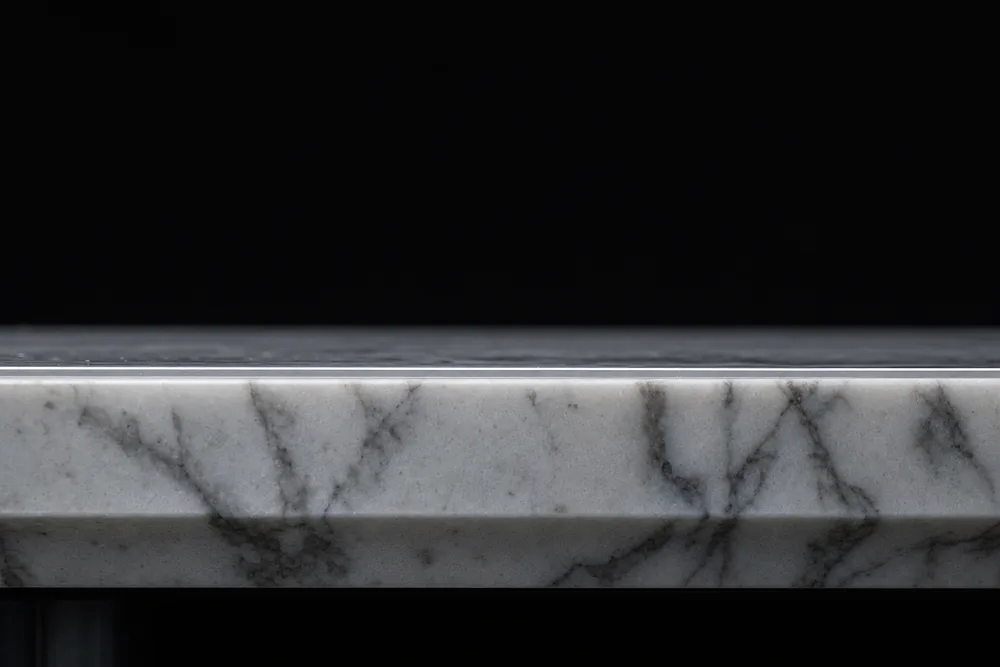 Stains
Etches
Scratches
Heat
The filmtakes all of it
Your stonenever sees any of it
Stains
Etches
Scratches
Heat
The filmtakes all of it
Your stonenever sees any of it
The stone never meets the mess.
Spills sit on the film until you wipe them, staining nothing. Acid stays on the film, away from the polish, until it's wiped. Scratches and heat marks live in a layer that can heal itself, and can be replaced.
The stone underneath stays exactly as it was installed, for as long as the film is on it.
02 · Why stone needs it
Four weaknesses. One answer.
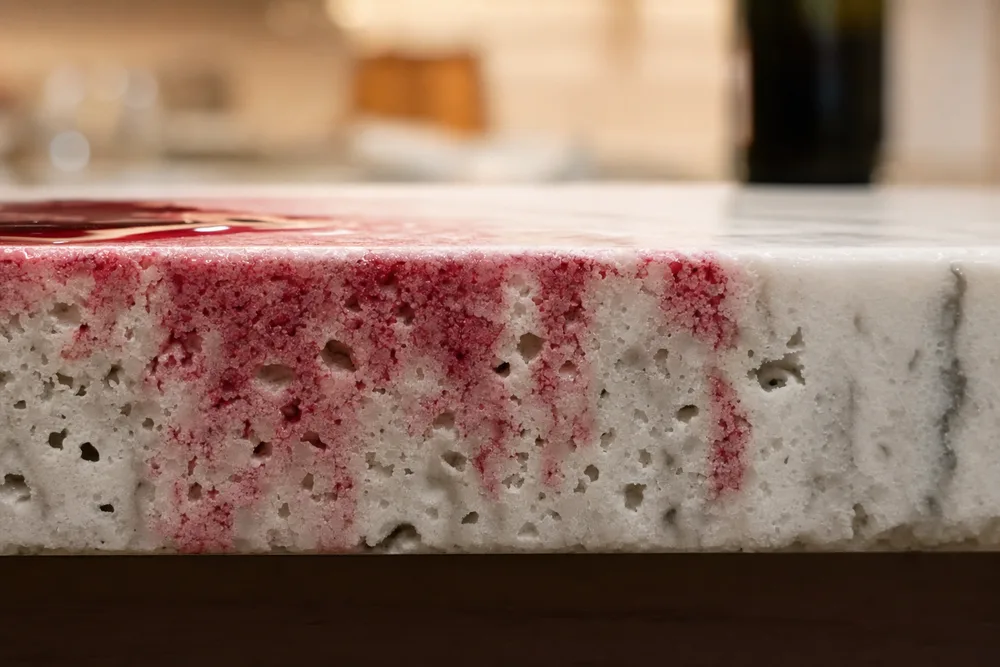
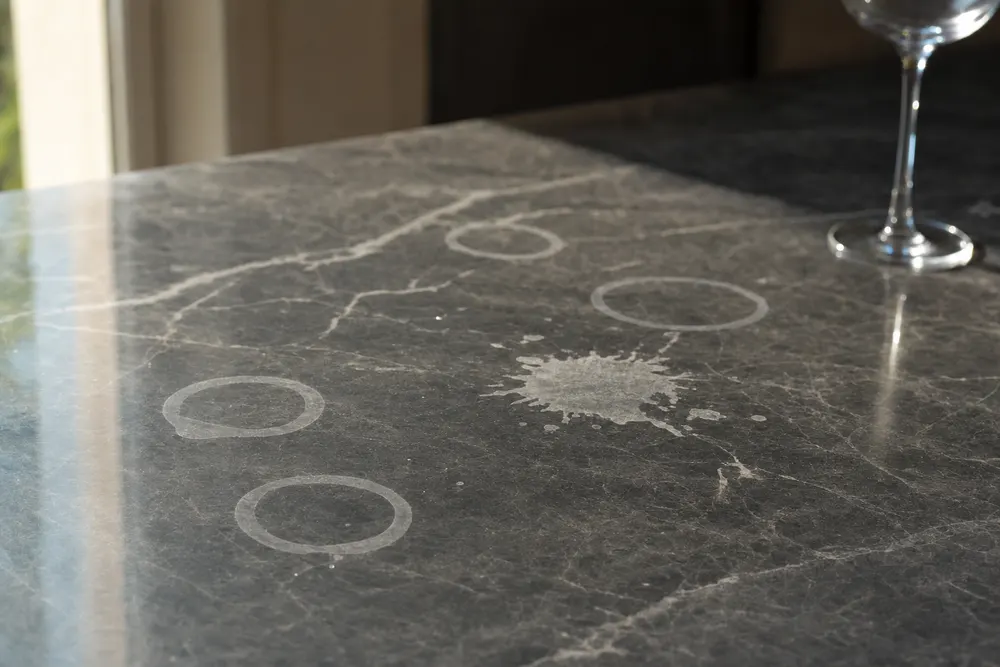
Stone drinks what you spill
Red wine, oil, coffee and turmeric stain bare stone in minutes. On the film they bead, and wipe away.
Acid etches bare polish
Lemon and vinegar burn dull marks into the finish. On the film, acid wipes away before it finds the stone.
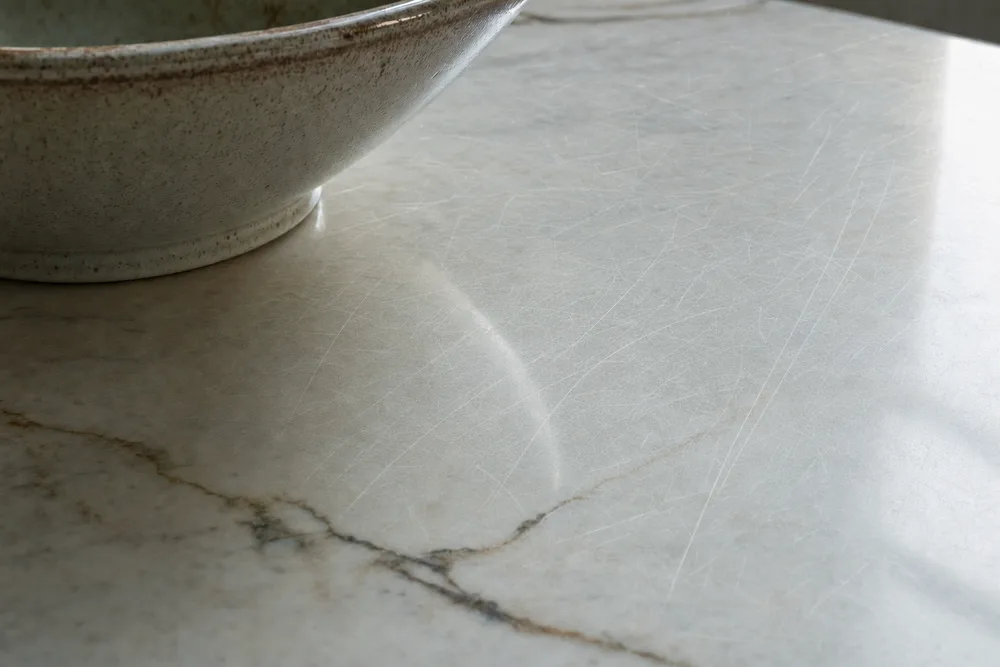
Daily wear scratches it
Pots, ceramics and keys mark bare stone. On the film, fine marks heal with warmth.
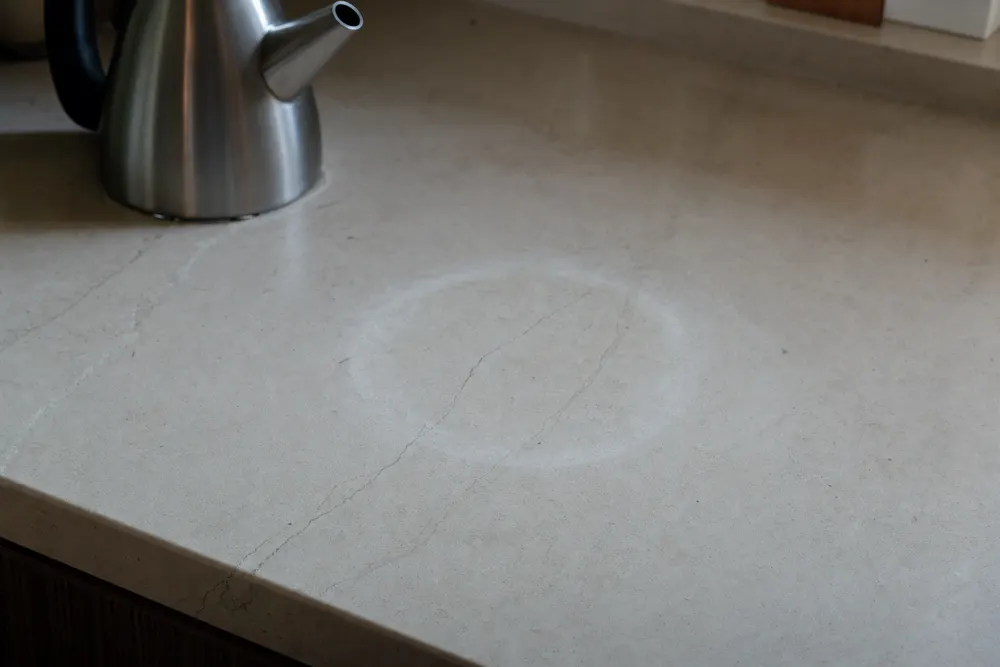
Heat leaves pale clouds
Bare finishes cloud near heat. Daily kitchen heat stops at the film instead.
03 · Gloss vs Satin
Same film, two ways to disappear.
Gloss for polished stone, satin for honed. The protection is identical. The only difference is how the surface reads light.
| Gloss | Satin | |
|---|---|---|
| Best for | Polished marble, quartzite and granite. Anywhere the stone has a mirror. | Honed, leathered and matte stone. Also polished stone you'd like calmer. |
| Visibility | Optically clear. The polish reads exactly as it did. | Near-invisible on honed stone. Softens harsh reflections. |
| Finish effect | Keeps the mirror. | No added shine, no plastic look. Kinder to fingerprints. |
| Protection | Identical in both finishes. Stains, etch marks, fine scratches (which self-heal with warmth) and daily kitchen heat all stop at the film. Use a board and a trivet: direct cuts and cookware straight off the flame are beyond any film. | |
| Warranty & install | The same 12-month film warranty, the same one-day install for a typical kitchen, and the same clean, simple removal. | |
04 · The limits
What it stops. What it doesn't.
Every protection product has limits. We'd rather you read ours before you pay than discover them after.
It stops
- Etch marks from acids: lemon, wine, vinegar, soft drink
- Stains soaking into the pores: oil, coffee, curry, beetroot
- Fine scratches from daily use, which self-heal with warmth
- Water rings and glass marks
- Heat marks from everyday kitchen life
It doesn't stop
- Direct knife cuts. Use a board, and we mean it.
- Pans straight off the flame. That's trivet territory.
- Outdoor exposure. Indoor surfaces only.
- Existing damage. Film protects, it doesn't repair.
- Chips and impact. A dropped cast-iron pan is still a dropped cast-iron pan.
Our heat rating is 120 °C, tested for extended exposure and printed on the film's technical data sheet, which we'll happily show you. Higher numbers advertised elsewhere may not always be tested, or may only reflect a short exposure. We publish the number we can prove.
05 · The process
From first photo to forgetting it's there.
Six steps, one visit, and everything fitted by hand on the day.
Send photos
Phone photos are fine. Tell us the stone if you know it, which rooms, and how you live: big cook, big entertainer, small kids. That's enough for us to start.
Measure up
Your measurements work; your fabricator's drawings work better. Either way, everything is confirmed against the real benchtop on the day.
The fixed quote
One number covering supply, installation and the warranty. It doesn't move on install day, and it doesn't expire the moment you hesitate.
Measured and cut by hand
No templates. Every panel is measured against your benchtop and cut by hand on the day, as the film is laid out: edges, sink cutouts, tap holes, corners.
Install day
A typical kitchen takes one day. We clean the stone back to bare, lay each panel, set it and hand-finish the edges. Dinner happens at home that night.
Aftercare and warranty
You get a short, honest care guide, and your 12-month film warranty registered in writing. Then you get to stop babying the benchtop.
06 · Common questions
Asked often, answered straight.
The six everyone asks first. Short version on top. The full thirty-question FAQ has its own page.
Q·01How long does the film last?+
Ten years or more, provided the aftercare is followed. The film doesn't expire on a schedule: it stays on the stone until you choose to remove or refresh it, and worn panels can be replaced one at a time. Separately, it carries a 12-month warranty against yellowing, cracking, blistering, delamination and adhesion failure. Wear is excluded, and we say that up front, because wear isn't failure. It's the film doing its job. A hard-working kitchen might choose to refresh a high-traffic panel sooner. That's replacing a film, not a benchtop.
Q·02Can I cut directly on it?+
A knife will mark the film. The self-healing top layer repairs itself from fine marks with warmth; a direct cut won't heal. The honest framing: a cut in the film is a replaceable panel, a cut in polished stone is a trades job. Use the board anyway.
Q·03What about hot pans?+
The film handles daily kitchen heat and carries a conservative continuous rating to 120 °C. A pan straight off the burner runs far hotter than that, so it gets a trivet. We would rather tell you this now than argue about it during a warranty claim.
Q·04Will it yellow over time?+
Cheaper films go yellow. Ours is the non-yellowing class of film, and yellowing is covered by the 12-month warranty, which is the strongest way we know to say we mean it.
Q·05Isn't natural stone tough enough on its own?+
Stone's strength is structural. The finish is the vulnerable part: marble and limestone react with everyday acids on contact, the pores drink in wine and oil, fine scratches collect, and heat can cloud a honed finish. None of it threatens the stone. It ruins the surface you look at, and the way back is a repolish. The film protects the finish. The structure never needed help.
Q·06Is this just PPF for benchtops?+
The concept is proven: a clear, self-healing layer that takes the damage instead of the surface. What goes on stone is chosen for stone: gloss or satin to match the finish, a tested 120 °C heat rating, residue-free removal, panels measured and cut by hand on the day. Paint film is judged on gravel. This is judged on lemon juice, red wine and dinner parties.
The next step
You know what bare stone risks. Now show us yours.
Photos are enough to start. We'll come back with a protection plan and a fixed quote. And if your surface doesn't need film, we'll tell you that too.